 English
 简体中文
简体中文 Русский
 Tiếng Việt
 한국어
한국어
Analysis of core process, key technologies and industry trends of square shell battery PACK production line
Get a quote:
2025-10-23
This paper analyzes the core processes (cell testing, module assembly, final assembly testing), key technologies (automation integration, thermal management, BMS matching) and industry trends (intelligence, flexibility)
With the rapid development of new energy vehicles and energy storage industries, square shell batteries have become one of the mainstream choices in the market due to their advantages such as high energy density, stable structure and easy integration. As a key link before the delivery of finished battery products, the square shell battery PACK production line directly determines the performance, safety and consistency of the battery, and its technical level and degree of automation have also become an important manifestation of the core competitiveness of enterprises.
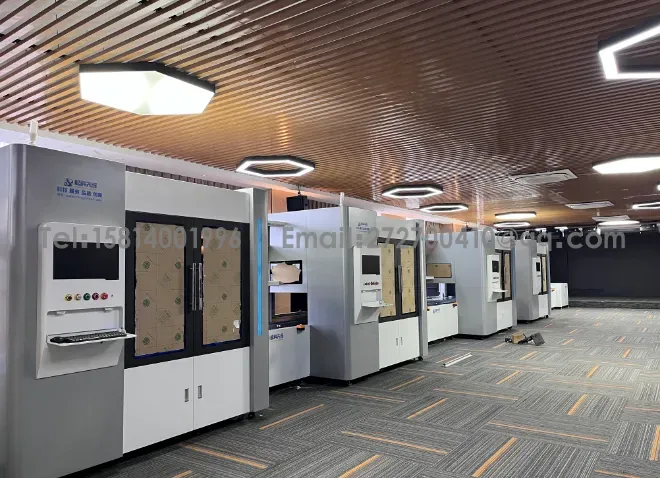
The core process of the square shell battery PACK production line can be divided into four major links: battery cell inspection and sorting, module assembly, PACK assembly and test verification. The first step is the battery cell inspection link, which requires the appearance, voltage internal resistance (OCV/IR), capacity and other indicators of the square shell batteries entering the factory. Qualified cells are screened through a high-precision tester and machine vision system, and sorted according to parameter differences to ensure the consistency of subsequent module assembly. For example, AI-driven appearance inspection equipment can identify minor scratches or deformation on the surface of the battery cell, and the sorting accuracy can reach ±1mV/±1mΩ, laying the foundation for stable module performance.
Next is the module assembly process, which is a key step to integrate a single cell into a functional unit. First, the battery cells are stacked or arranged through an automated robot, followed by laser welding technology implementation of the connection between the battery core ear and the bus bar - laser welding has the characteristics of small heat affected zone and high welding strength, which can effectively avoid the problem of virtual welding or over-welding. Common equipment such as fiber laser welding machine, welding speed can reach more than 30mm/s. After the module is assembled, the module voltage, internal resistance and insulation testing are required to ensure that the module performance is up to standard.
The PACK assembly process is the process of integrating multiple modules into a complete battery pack. First, the module is fixed in the battery case, and then core components such as wiring harnesses, thermal management components (such as liquid cooling plates, thermal pads) and BMS (battery management system) are installed. The installation of thermal management components is particularly important. For example, the fit of liquid cooling plates needs to be controlled within 0.1mm to ensure uniform heat dissipation and prevent local overheating from causing safety risks. In addition, the wiring harness connection needs to be waterproof plug-ins to meet the IP67 protection level requirements.
The testing and verification process is the last line of defense to ensure the safety and reliability of the battery pack. This link includes charge and discharge cycle testing (simulating actual usage scenarios to verify capacity and cycle life), environmental simulation testing (high and low temperature, humidity cycle) and safety testing (needle punching, extrusion, fire, etc.). For example, the charge and discharge cycle test needs to complete more than 50 cycles, and the capacity retention rate should not be less than 95%; the needle punching test needs to ensure that the battery does not catch fire or explode to meet the requirements of the national standard GB38031.
In addition to the core process, the key technologies of the square shell battery PACK production line also include automation integration, intelligent control and green production. In terms of automation integration, the production line widely uses six-axis robots, AGV trolleys and other equipment, and the automation rate can reach more than 90%, greatly improving production efficiency and consistency; in terms of intelligent control, the MES system realizes the whole process data traceability, and the AI quality inspection system can identify production defects in real time, with an accuracy rate of 99%; in terms of green production, the production line adopts energy-saving equipment (such as servo motors), and recycles welding waste and test waste to reduce environmental impact.
At present, the square shell battery PACK production line is developing in the direction of intelligence, flexibility and high-end. In terms of intelligence, the application of digital twin technology can realize virtual simulation of the production line and optimize production parameters in advance; in terms of flexibility, the production line can quickly switch different specifications of square shell batteries (such as 590mm, 720mm length cells), and the replacement time is controlled within 30 minutes; in terms of high-end, the high-voltage fast charging battery PACK production line is gradually emerging, which needs to meet the requirements of 800V high-voltage system, posing higher challenges to insulation and heat dissipation design.
Overall, the square shell battery PACK production line is one of the core infrastructures of the new energy industry. Its technological progress will continue to promote the improvement of battery performance and cost reduction, and help the high-quality development of the new energy vehicle and energy storage industry. Enterprises need to continuously optimize the production line process and improve the level of automation and intelligence to cope with the increasingly fierce market competition.
classification:
previous page


Copyright © 2025-2026 China Manufacturing Source Manufacturer Partner All Rights Reserved


Click to Chat.
Im online now.